
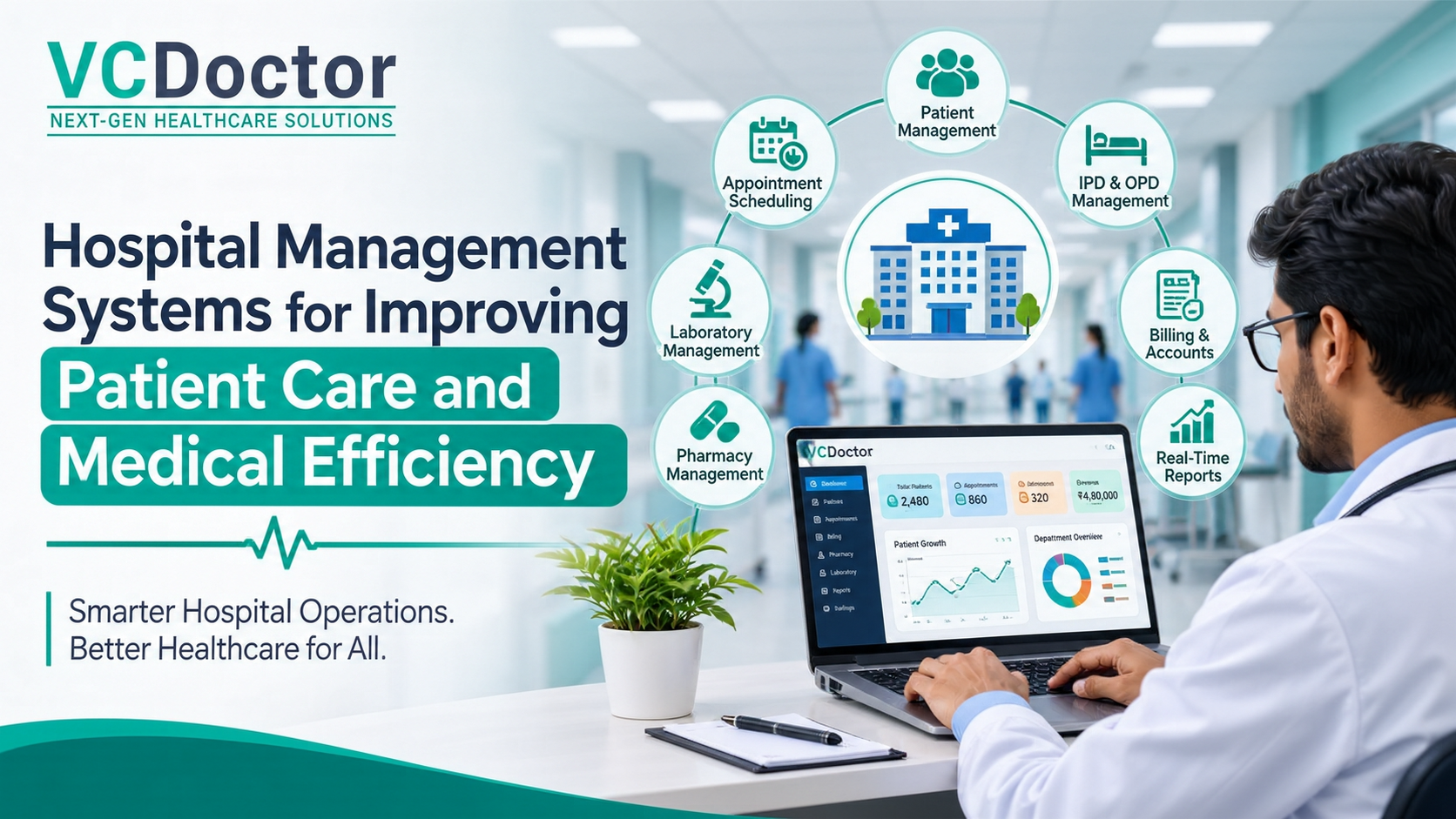
From patient registration, appointments, billing, to medical records, pharmacies, and the lab, hospitals conduct various activities daily. Without collaboration, the daily tasks can become inefficient and cumbersome, resulting in communication issues, delays, and unnecessary extra paper.
A properly designed Hospital Management System (HMS) aids hospitals to incorporate these activities on a single site. It helps to make information more accessible, enhances departmental coordination, and enables healthcare professionals to devote more time to patient care.
Let's learn how hospital management systems can enhance patient care and medical efficiency.
1. Patient registration and appointment management are significantly faster
One of the first procedures when patients visit a hospital is patient registration. Queuing up and waiting for an appointment can be a hassle when it is done manually.
This process can be streamlined with the help of a hospital management system.Here are some of the ways a hospital management system may help to streamline this process.
Patient records and registration via a digital system.
- Easy appointment scheduling and rescheduling.
- Improved scheduling of doctors.
- Easy access to past patient data.
- Self-service at reception.
This will make the patient's visit in the hospital better managed and better organized patient admission.
2. Improved Departmental Co-ordination within the Hospital.
Good departmental communication is essential to providing good healthcare. With disconnected systems, connecting information can take time when OPD, IPD, pharmacy, laboratory, and billing teams are using them.
These departments are connected by an integrated system.
- Relevant patient information is accessible to doctors.
- A laboratory has the ability to handle test requests and reports.
- Prescriptions can be viewed by members of the pharmacy staff.
- Billing teams can monitor charges associated to patients.
- Administrative personnel can keep an eye on the activities of the departments.
Hospitals can minimize unnecessary delays in regular tasks and repetitive work with improved coordination.
3. Accurate Patient Records and Medical History
It is crucial to keep patient records in order to provide a consistent healthcare service. It is often hard to organize and retrieve paper records and to keep them up to date.
A Hospital Management System facilitates Digital Record Management by offering:
- Centralized patient information.
- Past medical and consultation records.
- Prescription and treatment information.
- Diagnostic reports.
- Access to relevant patient information by authorised personnel.
Medical information is easier to organize, which aids healthcare professionals in patient consultations with informed decision making.
4. Efficient OPD and IPD Management
It is important to properly manage the activities of OPD and IPD departments as there are different levels of patient care.
An integrated system facilitates managing the two departments in the hospital without having to maintain separate records.
For OPD:
- Schedule appointments and doctor's schedules.
- Generate digital prescriptions.
- Maintain consultation history.
- Monitor patient queue and visit information.
For IPD:
- Coordinate admission and discharge of patients.
- Allocate beds and rooms.
- Track ward transfers.
- Maintain nursing and treatment records.
This facilitates the hospital staff to be able to follow the patient's journey from consultation to discharge.
5. Better Laboratory and Pharmacy Management
The laboratory and pharmacy departments directly assist patients with treatment. The delay in test reporting or prescription handling can impact on the patient experience.
These processes can be optimized through a connected hospital system.
Laboratory Management
- Manage test requests and sample tracking.
- Keep up-to-date digital diagnostic reports.
- Minimize repetitive data entry.
- Provide validated results to authorized doctors.
Pharmacy Management
- Manage digital prescriptions.
- Monitor the stock and expiration of medication.
- Monitor medicine dispensing.
- Keep buying and stock lists.
If these departments can be linked to patient information, healthcare workers can access the information without having to enter the same data multiple times.
6. Simplified Hospital Billing and Financial Management.
Patient billing mistakes and unpaid bills can generate issues for patients and hospital staff. Centralized billing system will help maintain better financial records.
Important features include:
- Billing management for OPD and IPD.
- Often auto-capture of relevant service charges.
- Claim management for insurance and TPA.
- Tracking payment and outstanding balance.
- Department-wise revenue reports.
For instance, when a patient visits the lab, the patient's charges can be captured in the billing workflow rather than manually entered.
7. Better Data Security and Access Control
Sensitive patient information, such as medical history, prescriptions, diagnostic reports and personal information are handled by hospitals. It is crucial to safeguard this information.
Quality Systems should include:
- Doctor, nurse and administrator access by role.
- Ensure the safe handling of patient data.
- Activity log to monitor user access.
- Data encryption.
- Back-up & recovery assistance.
These features enable hospitals to handle information responsibly, and allow authorized staff to access the information they need to do their jobs.
8. Real time reports for improved hospital decisions
Hospital admins should have accurate data to know the performance of various departments. Manually creating reports can take up a lot of time.
Management dashboards can offer valuable information on:
- Daily patient registrations.
- OPD activity, IPD activity.
- Bed occupancy.
- Daily pick-up and outstanding payments.
- Pharmacy / Inventory status.
- Department-wise performance.
These reports enable hospital managers to pinpoint areas of inefficiency and make decisions with new data.
9. features of the Best Health Management Software?
To select the best hospital management software, it's important to comprehend the everyday requirements, processes, and objectives of a hospital. It should provide the key functions of patient management, appointment scheduling, billing, pharmacy, laboratory management and digital medical records in a single integrated platform.
These are the key considerations when choosing a solution:
Essential Department: It should help the essential departments like OPD, IPD, Laboratory, Pharmacy, and billing.
Simple and Easy to Use: It is important for doctors and hospital personnel to be able to carry out their everyday activities without unnecessary hassles.
Integration Capabilities: Software should be able to integrate various departments and the necessary third-party applications.
Data Security: Look at who has access to the data, whether it's encrypted and monitor any audits.
Scalability: The system should be expandable to accommodate extra departments, branches and modules as the hospital expands.
Reporting and Analytics: Check dashboards to see if they offer useful operational and financial insights.
Implementation and Support: Training, data migration, and technical assistance should be taken into account prior to a decision.
The decision will depend on the size of the hospital, resources available, number of patients, and the nature of healthcare services offered.
Conclusion
Patient care is more than just medical expertise. Organized workflow, accurate patient information and proper departmental coordination and efficient administration are also needed in hospitals.
Essential activities are combined in an integrated Hospital Management System. It streamlines patient registration, digital records, lab management, pharmacy management, billing, and reporting, thereby cutting down on administrative tasks and enhancing daily workflow.